
2027 What Is the Shortest Time to Become a Nurse Practitioner?

Co-Founder and Chief Data Scientist
With over 280,000 nurse practitioner (NPs) in the US today and an impressive 46% job growth projected through 2033, nursing is clearly in high demand. However, the path to becoming a nurse practitioner can be complex and time-intensive, leaving many wondering if they can enter the field more quickly.
In this guide, I draw on my expertise to outline the shortest routes to becoming a nurse practitioner in 2024, focusing on accessible options that can help students make informed, time-efficient choices for their careers.
Key things you should know about becoming a nurse practitioner
- The shortest time to become a nurse practitioner is typically two years through accelerated programs after completing a nursing degree.
- Nurse practitioners (NPs) perform a variety of tasks, including diagnosing and treating medical conditions, prescribing medications, and managing patient care across specialties.
- Nurse practitioners in the US earned an average annual salary of $128,490 in 2023, with top earners making more than $168,030.
- The job outlook for nurse practitioners is strong, with a 46% growth projected from 2023 to 2033, adding 135,500 new jobs in the field.
- Pursuing a nurse practitioner degree online offers flexibility, enabling students to balance studies with personal and professional commitments.
- What is the shortest time to become a nurse practitioner for 2027? Fastest NP Path
- What are the different educational paths to becoming a nurse practitioner? Education Paths
- What do nurse practitioners do? NP Role
- What are the prerequisites for enrolling in a nurse practitioner degree program? Entry Requirements
- What are the financial aid options for students enrolling in a nurse practitioner program? Financial Aid
- Can you earn a nurse practitioner degree online? Online NP Degree
- What types of specializations are available in nurse practitioner programs? Specializations
- How much can I earn as a nurse practitioner? NP Salaries
- What are the top-paying industries for nurse practitioners? What are the top-paying industries for nurse practitioners?
- What are the licensing and certification requirements for nurse practitioners? What are the licensing and certification requirements for nurse practitioners?
- What Types of Master Degrees Are Available for Nurse Practitioners? What Types of Master Degrees Are Available for Nurse Practitioners?
- What is the job market for nurse practitioners? What is the job market for nurse practitioners?
- How Does Earning a DNP Advance Your Nurse Practitioner Career? How Does Earning a DNP Advance Your Nurse Practitioner Career?
- What Are the Long-Term Career Outcomes of Nurse Practitioner Programs? What Are the Long-Term Career Outcomes of Nurse Practitioner Programs?
- How do you choose the best nurse practitioner program? How do you choose the best nurse practitioner program?
- What Is the Total Cost and ROI of a Nurse Practitioner Degree? What Is the Total Cost and ROI of a Nurse Practitioner Degree?
- Are There Budget-Friendly Options for Specialized NP Training? Are There Budget-Friendly Options for Specialized NP Training?
- What Factors Influence the Selectivity of Nurse Practitioner Programs? What Factors Influence the Selectivity of Nurse Practitioner Programs?
- What Accreditation Standards Should Nurse Practitioner Programs Meet? What Accreditation Standards Should Nurse Practitioner Programs Meet?
- What Makes Accelerated BSN Online Programs a Strategic Choice for Aspiring Nurse Practitioners? What Makes Accelerated BSN Online Programs a Strategic Choice for Aspiring Nurse Practitioners?
- Can Affordable Bridge Programs Accelerate Your Path to Nurse Practitioner Success? Can Affordable Bridge Programs Accelerate Your Path to Nurse Practitioner Success?
- Can RN to BSN Online Programs Without Clinicals Accelerate Your Nursing Career? Can RN to BSN Online Programs Without Clinicals Accelerate Your Nursing Career?
- What Unique Benefits Do Accelerated Online MSN Women's Health Nurse Practitioner Programs Offer? What Unique Benefits Do Accelerated Online MSN Women's Health Nurse Practitioner Programs Offer?
What is the fastest way to become a nurse practitioner in 2027?
The fastest route to becoming a nurse practitioner depends on where you are starting: whether you already hold an RN license, have a BSN, have an MSN, or are entering nursing from another field. For many registered nurses with a BSN, the shortest practical path is an accelerated MSN nurse practitioner program, which may take 12 to 24 months. For nurses who already have an MSN but need an NP specialty, a post-master’s NP certificate can also take 12 to 24 months. Non-nurses usually need longer because they must complete foundational nursing preparation before advanced practice training.
This guide explains the shortest nurse practitioner pathways, how online and accelerated programs work, what prerequisites you may need, how licensing and certification fit into the timeline, and how to compare programs without overlooking accreditation, clinical placement, cost, and state practice rules. It is designed for working nurses, career changers, and students who want the fastest realistic path—not just the shortest advertised timeline.
Quick answer: shortest nurse practitioner timeline
The shortest time to become a nurse practitioner is typically 12 to 24 months if you are already a registered nurse with a BSN and enroll in an accelerated NP program, or if you already hold an MSN and complete a post-master’s NP certificate. Direct-entry options for non-nurses usually take longer, commonly 36 to 48 months, because they combine RN preparation with graduate-level nurse practitioner training. Some 1 year nurse practitioner programs online may offer a compressed format, but students still need to complete required clinical hours, meet certification eligibility standards, and satisfy state licensure rules.
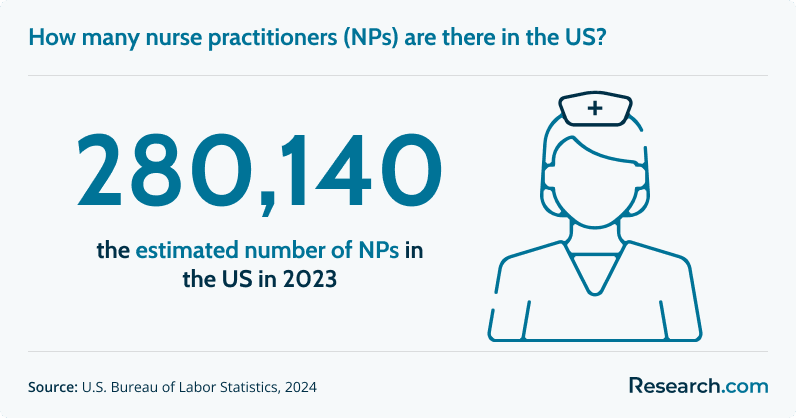
In 2023, there were around 280,140 NPs working in the US.
What are the different educational paths to becoming a nurse practitioner?
There is no single NP pathway that works for every student. The right route depends on your current credential, how much nursing experience you have, whether you need RN licensure first, and whether you want an MSN, DNP, or certificate. The fastest option on paper is not always the best option if it creates problems with clinical placement, certification eligibility, or state licensure.
| Starting point | Common NP pathway | Typical program length | Best fit | Important caution |
| RN with a BSN | Accelerated MSN NP program | 12 to 24 months | Licensed nurses ready for intensive graduate study | Fast programs can be difficult to manage with full-time work |
| MSN-prepared nurse | Post-master’s NP certificate | 12 to 24 months | Nurses adding an NP population focus or specialty | Certification eligibility depends on matching coursework and clinical hours |
| Non-nursing bachelor’s degree holder | Direct-entry MSN or DNP route | 36 to 48 months | Career changers who want an advanced nursing role | These programs are demanding because they combine basic nursing and graduate-level content |
| RN with ADN or ASN | RN-to-MSN or bridge route | 36 to 48 months | Associate-prepared RNs who want to move into advanced practice | Some programs include BSN-level bridge coursework before graduate courses |
| NP with MSN | MSN-to-DNP | 24 to 36 months | Practicing NPs seeking doctoral-level leadership or clinical preparation | This pathway does not usually create initial NP certification by itself |
Accelerated nurse practitioner programs: 12 to 24 months
Accelerated NP programs are usually built for registered nurses who already have a BSN and are prepared to move quickly through graduate coursework, advanced assessment, pharmacology, pathophysiology, specialty courses, and clinical rotations. These programs can be efficient, but they are not light. Students should expect a compressed schedule, frequent deadlines, and significant clinical requirements. If you are comparing formats, accelerated nurse practitioner programs can help you understand what schools mean by “accelerated” and how timelines differ.
Direct-entry nurse practitioner programs: 36 to 48 months
Direct-entry programs serve students who already have a bachelor’s degree outside nursing and want to move into advanced nursing practice. These programs generally include pre-licensure nursing education, preparation for RN licensure, and graduate-level NP coursework. They can be efficient for career changers because they avoid starting from scratch with a separate traditional bachelor’s degree in nursing, but they still require enough time to build clinical competency safely. Students exploring this route should compare outcomes from online direct-entry MSN programs for non-nurses and confirm how each program handles RN licensure preparation and NP clinicals.
Post-master’s nurse practitioner certificates: 12 to 24 months
A post-master’s NP certificate is often one of the quickest routes for nurses who already hold an MSN but do not yet have NP certification in the population focus they want. These programs are narrower than full MSN programs because they focus on the coursework and clinical preparation needed for a specific NP role. They can also be appealing to nurses comparing advanced credentials with other online certifications that pay well, although NP certification requires formal graduate nursing education, clinical training, and board eligibility—not just a short professional course.
MSN-to-DNP programs: 24 to 36 months
The MSN-to-DNP pathway is generally for nurses who already have graduate nursing preparation and want doctoral-level education in clinical leadership, evidence-based practice, systems improvement, and healthcare quality. It can strengthen long-term leadership options, but it is not usually the fastest way to become an NP for the first time. If your immediate goal is initial NP certification, make sure the DNP program includes the required NP specialty coursework and clinical hours rather than assuming that any DNP will qualify you for NP practice.
Traditional RN-to-NP programs: 36 to 48 months
Associate-prepared RNs may use RN-to-MSN or bridge programs to move into nurse practitioner preparation. These routes often include upper-division nursing coursework before graduate study begins. They can take longer than BSN-to-MSN options, but they may save time compared with earning a separate BSN and then applying to an MSN program. Nurses considering bridge options may also compare RN to FNP programs to understand how ADN-to-MSN structures work.
What do nurse practitioners do?
Nurse practitioners are advanced practice registered nurses who assess patients, diagnose health conditions, order and interpret tests, prescribe medications when authorized, develop treatment plans, and manage ongoing care. Their work can resemble parts of physician practice, but their legal authority depends on state rules, specialty certification, employer policies, and practice setting.
Core responsibilities
- Take health histories and perform physical examinations
- Diagnose acute and chronic conditions
- Order, review, and explain laboratory tests and imaging
- Prescribe medications and therapies within the NP’s scope of practice
- Monitor chronic conditions such as diabetes and hypertension
- Provide patient education, preventive care, and follow-up management
- Coordinate care with physicians, nurses, pharmacists, specialists, social workers, and other healthcare professionals
Where nurse practitioners work
NPs work in primary care offices, hospitals, outpatient care centers, community clinics, urgent care centers, specialty practices, long-term care facilities, mental health settings, and telehealth environments. Students researching online nurse practitioner programs should check whether each school has clinical partnerships that match the settings where they want to practice.
What are the prerequisites for enrolling in a nurse practitioner degree program?
NP admissions requirements vary widely because programs serve different types of students. A BSN-prepared RN, an ADN-prepared RN, and a non-nursing bachelor’s graduate will not apply with the same background. Before applying, confirm the degree level required, whether an active RN license is needed at admission, how much experience is preferred, and which prerequisite science or nursing courses must be completed.
High school graduate or GED holder
Students at this stage are not ready to enter an NP program directly. They first need undergraduate nursing education and, eventually, RN licensure.
- High school diploma or GED
- Biology, chemistry, and mathematics coursework preferred
- Minimum GPA requirement, which varies by program
- Completion of an entry-level nursing pathway before graduate NP study
RN with an ADN or ASN
Associate-prepared registered nurses may qualify for RN-to-MSN pathways, but programs often require bridge coursework before graduate-level NP classes begin.
- Active RN license
- Clinical nursing experience, often a few years
- Prerequisite coursework such as health assessment, pharmacology, and pathophysiology
- Minimum GPA requirement, which varies by program
- Letters of recommendation, if required
- Personal statement or admissions interview
RN with a BSN
BSN-prepared registered nurses usually have the most direct route into MSN or DNP nurse practitioner programs.
- Active RN license
- BSN from an accredited nursing program
- Clinical nursing experience
- Possible prior coursework in advanced health assessment, research methods, or pharmacology
- Minimum GPA requirement, which varies by program
- Letters of recommendation
- Personal statement or interview
Non-nursing bachelor’s degree holder
Career changers may apply to direct-entry MSN or DNP programs, but they typically need science prerequisites and must complete RN-level preparation before moving into NP-level practice.
- Bachelor’s degree in a non-nursing field
- Prerequisite courses in biology, anatomy, chemistry, and related foundational sciences
- Minimum GPA requirement, which varies by program
- GRE scores if the school requires them
- Personal statement or admissions interview
- Clinical or healthcare exposure if required by the program
What are the financial aid options for students enrolling in a nurse practitioner program?
NP programs can be expensive, especially when students reduce work hours to complete clinical rotations. When comparing costs, look beyond tuition. Include fees, books, travel to clinical sites, exam fees, background checks, drug screening, equipment, technology costs, and lost income if you need to work less.
- Federal student loans: Eligible students may use federal loans through the U.S. Department of Education. These may offer repayment protections that private loans do not. Students should still compare total debt carefully, even when choosing one of the affordable online FNP programs.
- Private student loans: Private loans can help fill funding gaps, but interest rates and repayment terms depend on lender policies, credit profile, and other factors.
- Scholarships and grants: Universities, professional nursing groups, hospitals, foundations, and community organizations may offer awards that do not require repayment.
- Employer tuition assistance: Hospitals and healthcare systems may help employees pay for graduate nursing education, sometimes in exchange for a work commitment after graduation.
- Nurse Faculty Loan Program: The Nurse Faculty Loan Program can support students preparing for nursing education roles and may include loan forgiveness tied to nurse faculty employment.
- State-specific grants: Some states fund nursing education to address workforce needs, particularly in underserved communities. These awards may include service obligations.
| Cost question | Why it matters |
| Does tuition differ for online and campus students? | Some schools charge different rates by format, residency, or credit load. |
| Are clinical placement fees included? | Clinical coordination costs can affect the true program price. |
| Can I keep working during the program? | Lost wages can be a major part of the total cost. |
| Will the program qualify me for my intended certification? | A cheaper program is not a good value if it does not meet certification or licensure needs. |
| What is the expected debt at graduation? | Debt should be compared with realistic earnings, not best-case salary examples. |
Can you earn a nurse practitioner degree online?
Yes, many nurse practitioner programs offer online coursework, especially at the MSN and DNP levels. However, “online” does not mean fully remote. NP students must complete in-person clinical training in approved healthcare settings. The classroom portion may be virtual, but patient care requirements must be completed face to face under appropriate supervision.
Online NP programs can work well for licensed nurses who need flexibility, but they require careful planning. Before enrolling, ask whether the school helps secure clinical sites or expects students to find their own preceptors. Also confirm that the program is authorized to enroll students in your state and that it meets your state board’s requirements.
| Online NP programs may be a good fit if... | A campus or hybrid program may be better if... |
| You are comfortable managing deadlines independently | You learn best with frequent in-person interaction |
| You need to keep working while studying | You want structured campus-based support |
| You have access to approved clinical sites nearby | Your local area has limited clinical placement options |
| You live far from a nursing school with your specialty | You want built-in networking through local faculty and classmates |
| You can verify accreditation, state authorization, and certification alignment | You are uncertain whether an online program will meet your state’s licensure requirements |
Advantages of online NP programs
- Scheduling flexibility: Online coursework can make graduate study more manageable for working nurses and caregivers.
- Geographic access: Students may be able to enroll in a program outside their immediate region without relocating.
- Reduced commuting: Online classes can lower travel time and campus-related costs.
- Accelerated formats: Some schools offer compressed schedules for students who can handle a heavier workload.
- Broader program choice: Online delivery may make it easier to find a specialty that is not available locally.
Challenges of online NP programs
- Clinical placement pressure: Students may need to identify local preceptors or travel for rotations.
- Less face-to-face connection: Mentorship and peer relationships may require more deliberate effort.
- High self-discipline requirement: Online students must manage time, assignments, and clinical documentation with less classroom structure.
- Technology dependence: Reliable internet, video conferencing access, and comfort with learning platforms are essential.
- Accreditation and recognition checks: Students must verify that the school, program, and specialty track align with certification and licensure expectations.
What types of specializations are available in nurse practitioner programs?
NP students select a population focus or specialty that shapes their coursework, clinical experiences, certification exam, and job options. This choice matters because changing specialties later may require additional graduate coursework or a post-master’s certificate.
| Specialization | Primary patient focus | Common practice settings | Good fit for students who... |
| Family Nurse Practitioner | Patients across the lifespan | Family practices, clinics, community health settings | Want broad primary care preparation |
| Pediatric Nurse Practitioner | Infants, children, and adolescents | Pediatric practices, children’s hospitals, outpatient centers | Prefer child and adolescent health |
| Adult-Gerontology Nurse Practitioner | Adults and older adults | Clinics, long-term care, geriatric care settings | Want to care for adult and aging populations |
| Acute Care Nurse Practitioner | Patients with serious or complex acute conditions | Hospitals, emergency departments, ICUs, trauma settings | Thrive in fast-paced, high-acuity environments |
| Psychiatric-Mental Health Nurse Practitioner | Patients with mental health needs | Behavioral health clinics, psychiatric hospitals, private practices | Want to diagnose and manage psychiatric conditions |
| Women’s Health Nurse Practitioner | Women’s health, reproductive care, prenatal and gynecological needs | Women’s health clinics, OB/GYN offices, outpatient practices | Want focused preparation in women’s health across life stages |
- Family Nurse Practitioner: FNPs provide primary care for children, adults, and older adults. Because the scope is broad, this path is popular among students who want flexibility across outpatient and community health settings.
- Pediatric Nurse Practitioner: PNPs focus on children’s development, wellness, illness management, vaccination needs, and family education.
- Adult-Gerontology Nurse Practitioner: AGNPs care for adults, including older adults with chronic or age-related conditions. Students looking for flexible and cost-conscious options may compare AGNP programs online.
- Acute Care Nurse Practitioner: ACNPs often work with patients who are unstable, critically ill, or recovering from serious medical events.
- Psychiatric-Mental Health Nurse Practitioner: PMHNPs evaluate, diagnose, and manage mental health conditions. Students weighing this specialty can review PMHNP salary data by state.
- Women’s Health Nurse Practitioner: WHNPs focus on reproductive health, gynecologic care, prenatal support, and related women’s health needs. Nurses coming from obstetric settings may also want to compare how much does a labor and delivery nurse make with WHNP earnings and responsibilities.
Specialty choice affects both career fit and compensation. If salary is a major factor, compare roles carefully using resources on the highest paid nurse practitioner specialties, but do not choose a specialty only because of pay. Clinical interest, patient population, state demand, and work environment matter just as much.
According to recent data, outpatient care centers employed the highest number of NPs in 2023, with an average annual salary of $139,860. The following chart provides further insights into the industries with the highest employment levels for NPs and their corresponding salaries.
How much can I earn as a nurse practitioner?
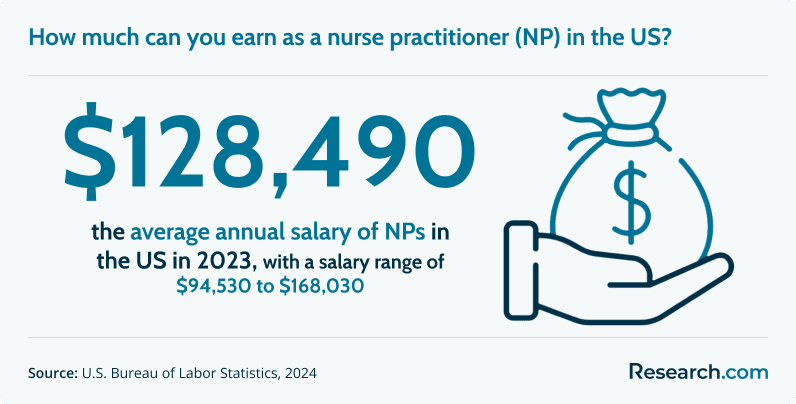
Nurse practitioner pay varies by location, specialty, work setting, experience, shift structure, and employer. According to data from 2023, the average annual salary for NPs in the United States is $128,490. The reported salary range runs from $94,530 to $168,030. Those figures are useful for planning, but they should not be treated as a guarantee for a specific graduate or program.
NP salaries also differ by industry. NPs in outpatient care centers averaged $139,860 annually, while NPs in offices of physicians averaged $122,780. This shows why students should evaluate likely employment settings, not just program length. The entry-level masters in nursing salary picture can also help students compare NP preparation with other graduate nursing outcomes. While the shortest time to become a nurse practitioner can be one to two years for some RNs, reaching higher-paying roles may take additional experience, specialty development, or leadership responsibility.
What are the top-paying industries for nurse practitioners?
The highest-paying industries for nurse practitioners in 2023 include business support services, with an average annual salary of $180,570, and residential intellectual and developmental disability, mental health, and substance abuse facilities, where NPs earn an average of $158,140 annually. These figures show that compensation can vary substantially outside traditional physician office settings.
Students should interpret top-paying industry data carefully. A high average salary does not always mean a large number of openings, predictable schedules, or the best clinical fit. Look at job availability, specialty requirements, work environment, and long-term career goals before targeting an industry solely because of pay.
What are the licensing and certification requirements for nurse practitioners?
Finishing an NP program is only part of the process. To practice, graduates must meet RN licensure, national certification, and state advanced practice requirements. Because rules vary by state, students should verify requirements before enrolling—not after graduation.
- Hold or obtain an RN license. Nurse practitioners must be registered nurses. RN licensure commonly requires passing the NCLEX-RN exam.
- Complete an accredited graduate NP program. The program should match the intended population focus, such as family, pediatric, adult-gerontology, acute care, psychiatric-mental health, or women’s health.
- Pass a national certification exam. Certifying organizations such as the American Association of Nurse Practitioners and the American Nurses Credentialing Center offer exams for specific NP roles.
- Apply for state NP licensure or recognition. State boards may require proof of education, certification, background checks, fees, and other documentation.
- Understand practice authority rules. Some states allow full practice authority, while others require physician collaboration or supervision agreements.
- Maintain certification and licensure. National certifications are commonly renewed every five years and usually require continuing education and practice-related documentation.
Before choosing a program, ask whether graduates are eligible for the certification exam tied to your intended specialty and whether the curriculum meets state board expectations where you plan to work.
What types of master’s degrees are available for nurse practitioners?
The most common graduate route for nurse practitioners is the Master of Science in Nursing, although some students pursue a Doctor of Nursing Practice instead. Within an MSN, students typically choose a specialty track such as FNP, PMHNP, AGNP, WHNP, PNP, or ACNP. The degree title alone does not determine your practice eligibility; your specialty curriculum, clinical hours, accreditation, and certification exam alignment are what matter.
Students comparing graduate nursing options can review the types of master degree in nursing to understand how NP tracks differ from nursing education, leadership, informatics, administration, and other MSN pathways.
What is the job market for nurse practitioners?
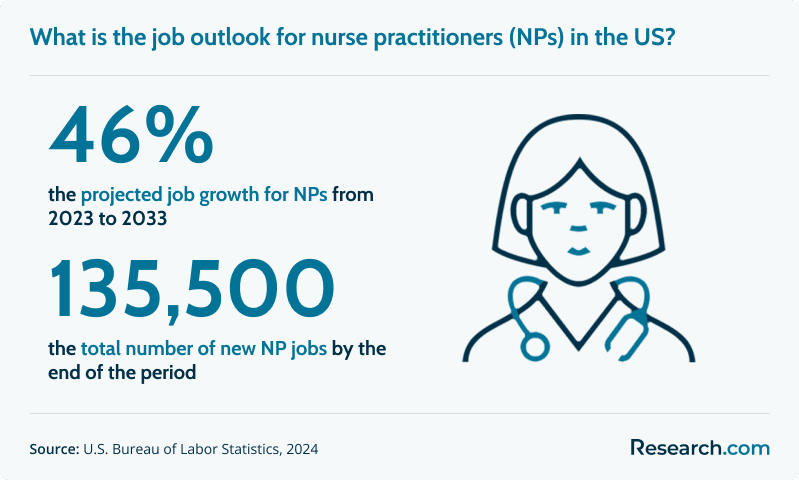
As of 2023, there are approximately 280,140 nurse practitioners in the United States. The job market for NPs is expected to grow significantly, with a projected job growth of 46% from 2023 to 2033. This translates to the creation of 135,500 new NP jobs over the next decade.
Demand is connected to several healthcare pressures, including access needs, an aging population, chronic disease management, and the ongoing healthcare worker shortage. Even with strong projected growth, local job markets can vary. Students should research demand in their state, specialty, and preferred work setting before committing to a program.
How does earning a DNP advance your nurse practitioner career?
A Doctor of Nursing Practice can strengthen an NP’s preparation in evidence-based care, quality improvement, systems leadership, clinical decision-making, and healthcare policy. It may be especially useful for NPs who want leadership roles, academic involvement, advanced clinical responsibility, or influence over organizational practice standards.
A DNP is not automatically necessary for every NP career goal, and it may not be the fastest route if your priority is entering practice quickly. For nurses who want doctoral preparation while maintaining employment, online DNP nursing programs may offer more flexible scheduling. Always check whether the DNP program is post-BSN, post-MSN, or designed for already-certified NPs.
What are the long-term career outcomes of nurse practitioner programs?
Good NP programs should prepare graduates for certification, clinical practice, and advancement—not just graduation. When evaluating long-term value, look for data on board pass rates, employment outcomes, clinical placement support, faculty experience, specialty alignment, and alumni career paths. If a school does not clearly explain these outcomes, ask directly.
Long-term outcomes also depend on the student’s specialty choice, state practice environment, willingness to relocate, prior nursing experience, and ability to build clinical competence. Accelerated programs can move students into the workforce faster, but the pace can be risky if students do not have enough support or clinical access.
How do you choose the best nurse practitioner program?
The best NP program is the one that fits your license status, specialty goal, state requirements, budget, schedule, and clinical placement needs. Rankings can be useful, but they should not replace due diligence. A highly ranked program that cannot support your state authorization or clinical placement may be a poor choice for you.
| Factor | What to verify | Why it matters |
| Accreditation | Confirm recognized nursing accreditation and program standing | Accreditation affects certification eligibility, licensure, employer recognition, and financial aid access |
| Specialty track | Make sure the program offers your intended NP population focus | Your specialty determines certification and practice options |
| Clinical placement | Ask whether the school arranges placements or expects students to find preceptors | Clinical delays can extend your graduation timeline |
| State authorization | Confirm the program can enroll students in your state | Some online programs cannot accept students from every state |
| Certification alignment | Ask which board exam graduates are prepared to take | Program coursework must match the certification you need |
| Total cost | Calculate tuition, fees, travel, books, exams, and lost income | The lowest tuition is not always the lowest total cost |
| Format and pace | Compare full-time, part-time, accelerated, online, hybrid, and campus options | The fastest format may not be realistic if you work full time |
- Check accreditation first. Do not assume every online or accelerated program meets professional standards.
- Match the program to your specialty. If you want a mental health role, an FNP program will not prepare you for PMHNP certification.
- Ask about clinical support. Clinical placement is one of the biggest bottlenecks in NP education.
- Compare cost honestly. Include living expenses and reduced work hours, not just tuition.
- Look at related credentials only when relevant. For example, students interested in behavioral health may also explore a substance abuse counselor certification, but that credential does not replace NP certification or licensure.
What is the total cost and ROI of a nurse practitioner degree?
The return on investment of an NP degree depends on your current income, program cost, debt, graduation timeline, specialty, state, and likely job setting. A shorter program can improve ROI if it helps you enter advanced practice sooner, but only if the program supports certification, licensure, and clinical completion without delays.
When building a budget, compare NP costs with earlier nursing education expenses. For example, understanding the average cost of RN to BSN programs can help associate-prepared RNs plan the full pathway from undergraduate completion to graduate study. Avoid judging ROI solely by national salary averages. Use local job postings, employer tuition benefits, expected debt, and realistic repayment scenarios.
Are there budget-friendly options for specialized NP training?
Yes, but affordability should be evaluated alongside accreditation, clinical support, certification eligibility, and student services. A low-cost program that leaves students responsible for finding scarce clinical placements can become expensive if graduation is delayed. Budget-conscious students should compare tuition, fees, program length, transfer credit policies, employer reimbursement, and whether the specialty has strong local demand.
Specialty-focused online options may help reduce relocation and commuting costs, but they still require clinical experiences. Students interested in adult and aging populations, for example, may compare AGNP programs online as part of a broader cost and career analysis.
What factors influence the selectivity of nurse practitioner programs?
NP admissions decisions often consider GPA, undergraduate nursing preparation, active RN licensure, clinical experience, prerequisite coursework, recommendations, written statements, interviews, and fit with the specialty. Competitive programs may also have limited clinical capacity, which can make admission harder even for qualified applicants.
Applicants can improve their chances by strengthening prerequisite grades, gaining relevant nursing experience, choosing recommenders who can speak to clinical judgment, and writing a focused statement that connects their background to the NP specialty. Students who need a broader view of admissions competitiveness can review What nursing programs are easy to get into?, while remembering that “easier to enter” should never outweigh accreditation or licensure fit.
What graduates say about accelerated and online nurse practitioner programs
- : "My accelerated NP program moved quickly, and the pace forced me to stay organized from the first week. Online coursework made it possible to keep up with family and work responsibilities, while clinical rotations gave me the hands-on preparation I needed. By graduation, I felt ready to step into family practice with confidence. — Althea"
- : "The online format gave me the flexibility I needed as a working nurse, but it still required discipline. I completed coursework around my shifts and attended clinical rotations in nearby healthcare settings. The mix of virtual learning and in-person patient care prepared me well for pediatric practice. — Jared"
- : "I wanted to become an NP without stretching the process over many years. The accelerated structure helped me move faster, but it did not feel like shortcuts were being taken. The program prepared me for certification and helped me transition into practice soon after graduation. — Deirdre"
What accreditation standards should nurse practitioner programs meet?
Accreditation is one of the most important program checks for future nurse practitioners. Look for recognized nursing accreditation, such as approval through the Commission on Collegiate Nursing Education or the Accreditation Commission for Education in Nursing. Accreditation helps signal that the program follows accepted academic and clinical standards and may affect financial aid, certification eligibility, licensure, and employer acceptance.
Do not stop at the school’s general accreditation. Confirm that the nursing program itself is accredited, that the NP specialty track is active, and that graduates are eligible for the correct certification exam. Students comparing very fast options, including 1-year nurse practitioner programs online, should be especially careful to verify accreditation, clinical hour requirements, and state approval.
What makes accelerated BSN online programs a strategic choice for aspiring nurse practitioners?
For non-nurses or students without a BSN, an accelerated BSN can be a step toward future NP study. These programs may help students complete undergraduate nursing preparation more efficiently, then pursue RN licensure and graduate NP education later. However, an accelerated BSN alone does not make someone a nurse practitioner. It is a foundation for RN practice and future graduate admission.
Students considering this route should evaluate accelerated BSN online options by accreditation, clinical quality, NCLEX preparation, state authorization, and transfer policies. The strongest pathway is one that builds a credible RN foundation before moving into advanced practice.
Can affordable bridge programs accelerate your path to nurse practitioner success?
Bridge programs can help licensed practical nurses and associate-prepared nurses move toward RN and BSN-level preparation, which may later support NP admission. They are not NP programs, but they can be part of a longer career ladder. The key is to choose a bridge program that supports licensure progression, transfer credit, and future graduate eligibility.
Students looking for a lower-cost entry point may compare cheap LPN to RN bridge programs online. Before enrolling, confirm the program’s licensure outcomes, clinical requirements, state board approval, and whether credits are likely to transfer into BSN or MSN pathways.
Can RN-to-BSN online programs without clinicals accelerate your nursing career?
RN-to-BSN programs that do not require traditional in-person clinicals can help working registered nurses complete a bachelor’s degree with fewer scheduling barriers. These programs often build on the nurse’s existing clinical experience and focus on leadership, evidence-based practice, population health, research, and professional nursing development.
For RNs who need a BSN before applying to NP programs, RN to BSN online no clinicals options may shorten the route to graduate admission. Still, students should verify accreditation, transfer policies, and whether the BSN will meet prerequisites for their intended NP school.
What unique benefits do accelerated online MSN women’s health nurse practitioner programs offer?
Accelerated online MSN women’s health nurse practitioner programs focus on advanced care for women across life stages, including reproductive health, gynecologic care, prenatal and postnatal needs, and preventive services. The online structure may help working nurses complete didactic coursework with more flexibility, while clinical rotations provide required hands-on experience.
Students considering accelerated online MSN women's health nurse practitioner programs should confirm that the curriculum aligns with WHNP certification eligibility, that clinical placements include relevant women’s health settings, and that the program is authorized in the state where they live and intend to practice.
Common mistakes to avoid when choosing the fastest NP pathway
- Choosing speed over eligibility: A short program is not useful if it does not qualify you for certification or state licensure.
- Ignoring accreditation: Always verify nursing program accreditation, not just university accreditation.
- Assuming online means no clinicals: NP programs require in-person clinical training even when coursework is online.
- Underestimating clinical placement challenges: Ask early whether the school finds preceptors or expects you to secure them.
- Looking only at tuition: Fees, travel, exams, books, lost income, and delayed graduation can change the real cost.
- Choosing a specialty too casually: Your NP population focus shapes your certification exam and practice options.
- Relying only on rankings: A program must fit your state, schedule, budget, and clinical goals.
- Assuming salary outcomes are guaranteed: National averages do not predict your exact pay after graduation.
Questions to ask before enrolling in a nurse practitioner program
- Is the nursing program accredited by a recognized accreditor?
- Which NP certification exam does the program prepare graduates to take?
- Is the program authorized to enroll students from my state?
- Will the program meet licensure requirements in the state where I plan to practice?
- Does the school arrange clinical placements, or am I responsible for finding preceptors?
- How many clinical hours are required, and where can they be completed?
- What are the board certification pass rates and graduation rates?
- What is the total cost, including fees and clinical-related expenses?
- Can I complete the program while working, or will I need to reduce my hours?
- What support is available for online students, including advising, tutoring, and clinical coordination?
References
- Projections Central. (2024). Long-term occupational projections (2022-2032). Retrieved November 13, 2024, from Projections Central.
- U.S. Bureau of Labor Statistics. (2024). Nurse anesthetists, nurse midwives, and nurse practitioners. Retrieved November 13, 2024, from BLS.
- U.S. Bureau of Labor Statistics. (2024). Occupational employment and wages, May 2023 - 29-1171 Nurse practitioners. Retrieved November 13, 2024, from BLS.
Key Insights
- The shortest realistic NP route is usually 12 to 24 months for BSN-prepared RNs in accelerated MSN NP programs or MSN-prepared nurses completing post-master’s NP certificates.
- Non-nurses should expect a longer timeline, commonly 36 to 48 months, because they must complete RN preparation before advanced practice training.
- Online NP programs can reduce scheduling barriers, but all NP students still need in-person clinical experience.
- Accreditation, certification alignment, state authorization, and clinical placement support are more important than the advertised program length.
- In 2023, the average annual NP salary in the United States was $128,490, but pay varies by specialty, setting, location, and experience.
- The NP job market is strong, with projected job growth of 46% from 2023 to 2033 and 135,500 new NP jobs expected over the decade.
- The best program is not always the fastest one. Choose the shortest pathway that still protects your eligibility, clinical preparation, licensure options, and long-term career goals.
Other Things You Need to Know About Becoming a Nurse Practitioner
In 2027, states like Florida, Texas, and California offer some of the shortest nurse practitioner programs. These can be completed in as little as two years if prerequisites are met, thanks to accelerated program options and flexible clinical hours. Check state-specific requirements for precise details.
Yes, fast-track nurse practitioner programs are available in 2027. These programs typically allow registered nurses to complete their master's degree in around 18-24 months. Admission often requires a BSN degree and current RN license.
A Master of Science in Nursing or a Doctor of Nursing Practice is required for nurse practitioner licensure in 2027. Most programs require a current RN license, a BSN, and completion of 500 to 1,000 supervised clinical hours before graduation.


